
When visiting Alcohol and Drug Dependency Services (ADDS) of Southeast Iowa’s website, it’s immediately evident the organization considers the strengths-based profession of peer support pivotal to living a life in recovery. Their website prominently features Peer Recovery Coaching and includes peer support in its agency’s mission statement.
Peers can access a team of five recovery coaches in four counties: Des Moines, Henry, Lee, and Louisa.
As Peer Recovery Coach Supervisor Miranda Justice points out, services extend far beyond the agency walls - both physically and figuratively, “We meet people where they’re at, whether it be out in the community or where they are mentally, like where they are in their stage of change. We welcome you if you are still ambivalent about recovery or if you are five years in and just need some support. We meet you wherever you’re at. And we help people set goals that are customized to them. We help people customize their recovery. That's really what we do.”
Miranda explains how the team of five recovery coaches allows for extensive outreach throughout the region while describing recent expansion efforts, “Hope just started doing groups at the jail in Des Moines County, and she has been seeing people one-on-one at the jail for some time. Becca and I just went to a sober living in Mount Pleasant, and she’s going to start doing groups there at the sober living. Hope and I and Kathy a few times have been to the behavioral units at the hospital to get our faces out there and let people know that we can help connect them to the right services.”
The ADDS recovery coach team meets weekly, and members say they are grateful for the ongoing training and support they receive from each other. In addition to internal training, Peer Recovery Coach Hope Rice points out how attending the IPWC CEU, The Facilitator’s Toolkit: Enhancing Group Collaboration and Interaction, developed and facilitated by Training Director Kellee McCrory and Training and Curriculum Development Specialist Katelyn Akright, helped prepare her to work with peer groups. Rice shares, “The Facilitation 101 that I attended really helped me gain the knowledge and confidence I needed to lead the groups I am conducting at the behavioral unit, here at ADDS Residential, and the Des Moines County jail. During the time of the class I was just freshly starting, so I really wanted some professional advice on how to engage a whole slew of different types of people to keep them engaged, to make sure everyone was heard, how to make them feel comfortable sharing some of their story with the group, and how to go about it. The training really gave me the tools necessary to lead successfully. Sharing your story has the power to break down barriers, challenge preconceived notions, and form a sense of unity among diverse individuals and I'm proud to be a part of helping people grow."
The recovery coaches say robust collaboration among all colleagues at ADDS reinforces the agency’s high-quality care and services. Peer Recovery Coach Becca Neil affirms the cooperation throughout the agency, “Our counselor here will personally walk somebody to my office and introduce them to me. And I also sit in on her groups with her to get familiar with the faces and explain my role, so that way they can feel comfortable. They know exactly what peer recovery is and that I’m no different than them, and they feel comfortable to come with me and then I’ll support them.”
Peer Recovery Coach Nancy Johnson expands on the value and significance of connecting with peers, “It’s not just understanding, but it’s that empathy of knowing that hurt, that shame, and the hopelessness. I reached that point of, I thought I had gone too far. And that’s in every aspect of the word, from freedom to family to life, to being able to overcome that addiction.”
Peer Recovery Coach Kathy Stephenson sums up the powerful role of providing peer support, “I feel like I get more and more inspired every day working here, just learning these new things and the training and being able to help people. I want to give them hope as well because I’ve accomplished quite a few things that I never in my life thought I would. I just want to inspire somebody. I hope I touch a few people’s hearts and minds and lives and help them know that there is a better life.”
Alcohol and Drug Dependency Services of Southeast Iowa (ADDS)
1340 Mt. Pleasant St., Burlington, 319-753-6567
122 N. Main St., Mt. Pleasant, 319-385-2216
928 Main St., Keokuk, 319-524-4397
304 Hwy 61 North, Wapello, 319-523-8436
Email: information@addsiowa.org
Website: www.addsiowa.org
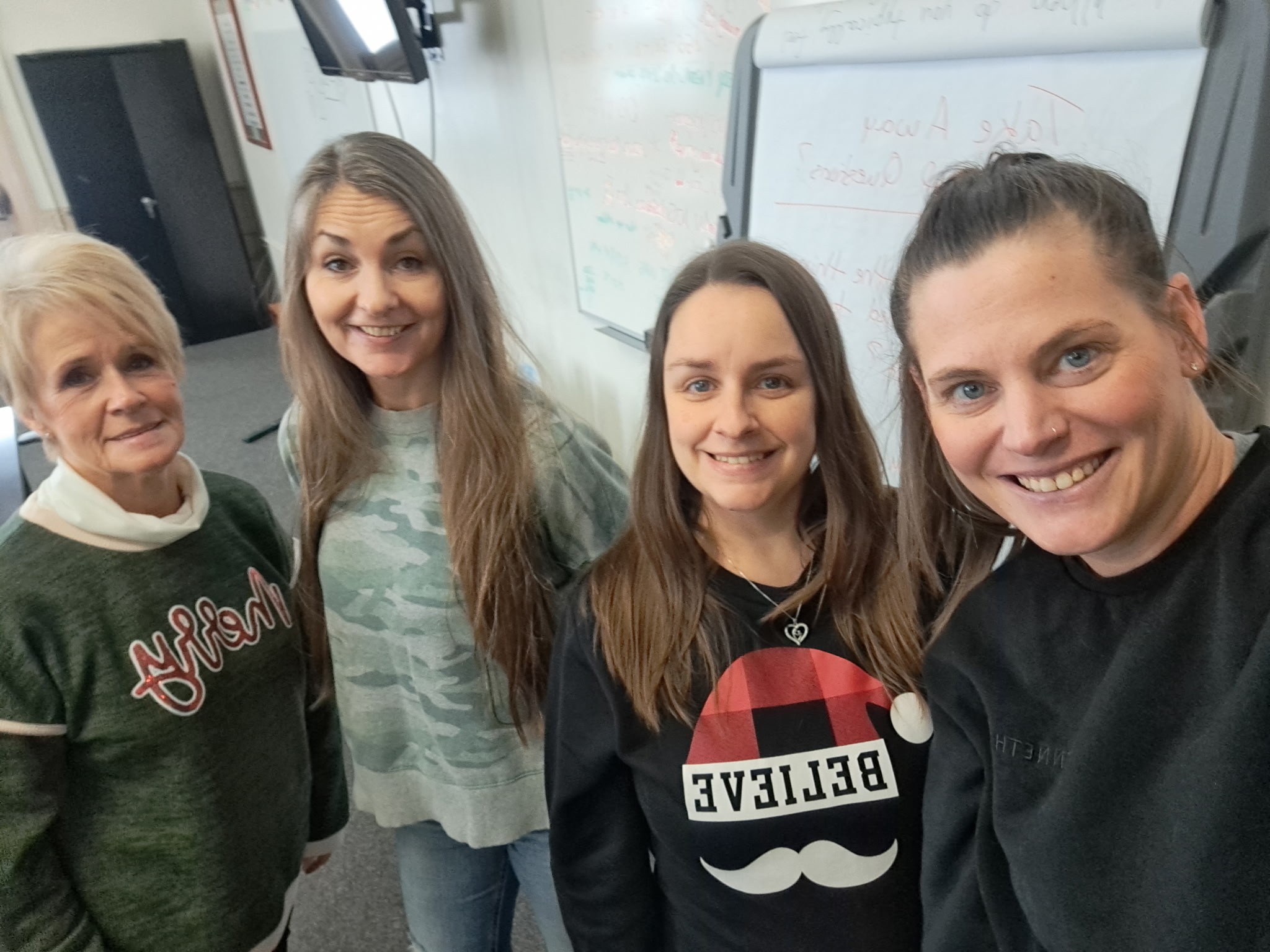
ADDS Recovery Coaches from Left to Right: Nancy Johnson, Hope Rice, Becca Neil, and Kathy Stephenson.